Shure SM4 – Your Home-Studio Workhorse

What is it
The SM4 is a large-diaphragm condenser microphone built for studio and home recording. It’s designed to capture vocals and instruments with clarity, detail, and richness.
Why artists love it
- Natural, balanced sound that’s mix-ready: The SM4 uses a 1-inch brass dual-diaphragm capsule that delivers smooth lows, clear highs, and balanced mids. Reviewers say it picks up acoustic guitar or vocals with a kind of “you’re-in-the-room” realism.
- Handles anything from soft to loud: With a high max SPL (up to 140 dB), it can record whisper-quiet vocals or loud instruments (guitar amps, drums, horns) without distortion.
- Clean recordings, less editing: The mic includes RF-interference shielding (e.g. blocking noise from phones or Wi-Fi), an internal pop-filter, and an integrated shield — which means fewer surprises when mixing.
- Big sweet spot & forgiving pickup: The uniform cardioid polar pattern gives a large “sweet spot” — so you don’t need dead-on mic placement. You can move a little and still sound good.
- Built for the long haul: All-metal build quality, rugged design — good for a long-term home-studio setup.
Find out more here.
Where it shines
If you’re building a home-studio to record your vocals, acoustic guitar or other instruments, and want a “finished” sound without needing lots of extra gear — SM4 is a strong pick. It’s especially great if you care about detail and want a warm, natural, polished result for songs, demos, or video content.
Things to note
Because the SM4 is a condenser mic, it picks up all those little details that bring recordings to life. Set it up in a calm, reasonably quiet space and it’ll reward you with a rich, professional sound. For louder sources or lively rooms, a bit of mic technique or some simple processing goes a long way — and that flexibility is part of what makes it such a solid studio tool.
Shure MV7i – All-In-One Mic + Interface for Creators & Streamers

What is it
The MV7i is a dynamic microphone with a built-in two-channel audio interface — meaning it’s basically a “mic + mixer + interface” all packed into one device. You get the microphone itself, plus the ability to plug in a second mic or an instrument, and record both together on the same device.
Why it matters – especially for creators, rappers, podcasters, collabs
- Simplified setup (no extra interface needed): Plug the MV7i into your laptop, phone or tablet (USB-C), and you’re ready to go. Then plug in a second mic or instrument — and you can record two sources at once. Perfect for collabs, guest vocals, rap + beat, or singer + guitar combos.
- Professional vocal tone + versatile input options: The main dynamic capsule gives a rich, natural tone — similar lineage to Shure’s classic broadcast/vocal mics — so vocals come through clear and strong.
- DSP and built-in cleanup tools: Want a cleaner vocal sound even if your room is untreated? MV7i offers Real-Time Denoiser (to cut ambient noise), Digital Popper Stopper (for plosives), Auto Level / SmartGate (balances levels, reduces crosstalk) — super handy for home studios or streaming setups without sound-proofing.
- Flexible recording modes & portability: Whether you record in mono, stereo, or on separate tracks, the MV7i delivers clean 24-bit / 48 kHz audio, includes a 3.5 mm headphone output for real-time monitoring, and works seamlessly with Mac, PC, and many mobile devices — making it a great option for on-the-go sessions. On top of that, Shure’s MOTIV Mix™ software gives you hands-on control over the mic’s built-in DSP features. From activating noise reduction and auto-leveling to fine-tuning compression, EQ, and monitoring levels, MOTIV Mix lets you shape your sound before it ever hits your DAW — ideal for artists who want a fast, reliable, and repeatable workflow.
Where it shines
- Solo artists or rappers who want to record vocals + instrument (beatbox, guitar, keyboards) together.
Podcasters, collab artists, or anyone recording multiple sources (voice + guest, voice + beat, etc.) in one go. - Creators who want minimal gear — no need to buy a separate interface, cables, mic preamps — just plug and record.
- Those working in less-than-ideal rooms: the DSP helps clean up background noise, plosives, etc.
What to check
Because the MV7i is a dynamic microphone designed with vocals and close-miked instruments in mind, it delivers a focused, controlled sound that works especially well in home studios and untreated rooms. For recordings where you’re chasing ultra-airy detail — like very delicate acoustic instruments — a condenser mic can add a bit more nuance. That said, the MV7i really shines when paired with Shure’s MOTIV Mix™ software, where you can easily fine-tune gain, DSP settings, and overall tone to match your style. A few minutes in MOTIV Mix is often all it takes to dial in a sound that feels polished, balanced, and ready to share.
Shure Nexadyne 8/C (Nexadyne Family) – The Rock-Solid Live Mic for Stage & Touring
What is it
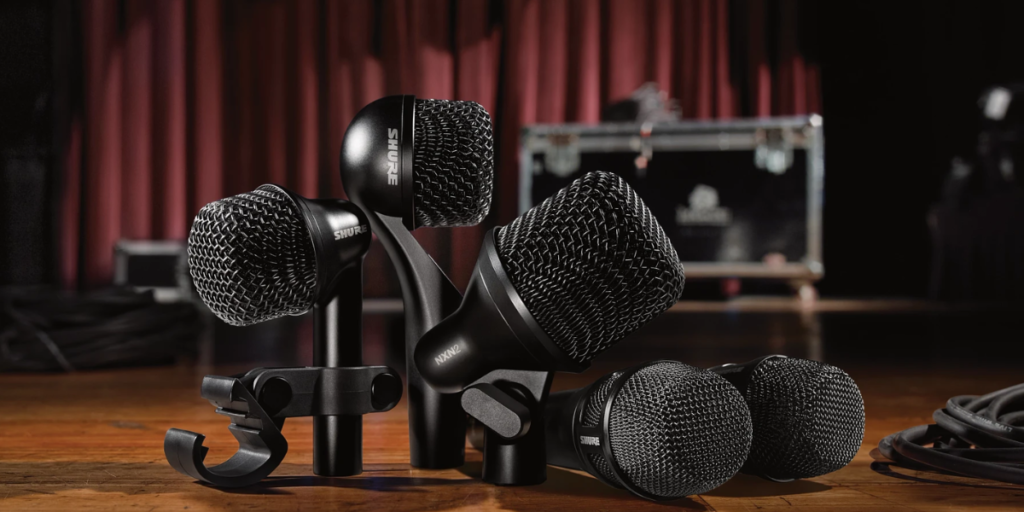
The Nexadyne line is a full family of dynamic microphones built for live performance, touring, and stage use — not just a single vocal mic. All models share Shure’s Revonic™ Dual-Engine Transducer Technology, which uses two calibrated dynamic elements to deliver cleaner sound, more consistent polar patterns, and excellent off-axis rejection.
The series is designed to cover most common live applications:
- Nexadyne 8/C & 8/S – handheld vocal mics (cardioid / supercardioid)
- Nexadyne 2 – kick drum and low-frequency sources
- Nexadyne 5 – guitar and bass amps
- Nexadyne 6 – toms, snare, and percussion
For wireless setups, the Nexadyne vocal models are also available as capsules for Shure wireless systems, making it easy to keep the same sound when switching between wired and wireless on stage.
In short: one mic platform, multiple stage applications — built to stay consistent from rehearsal to tour.
Why it matters for bands, live performances and heavy-duty use
- Dual-engine transducer = more natural, consistent sound: The two transducers help deliver a stable polar pattern and cleaner, more accurate sound — meaning your vocals or instruments stay clear and focused, even in noisy stage environments.
- Less processing needed: Thanks to the Nexadyne’s clean, controlled capture and — on models like the 8/S — the supercardioid polar pattern, unwanted bleed from nearby sources is kept to a minimum. This is especially useful for loud stages or close drum miking, where spill from cymbals or other instruments can quickly become an issue. The result: tighter recordings, clearer separation, and less time spent EQ’ing or cleaning up tracks — so the performance energy stays intact.
- Tour-ready durability: Built for reliability, road use, rehearsals, live shows — rugged enough to survive the demands of stage life or frequent transport and setup.
- Versatile for vocals and instruments: Whether you’re singing, rapping, or miking guitar amps/drums/other instruments, Nexadyne handles it — great for bands, gigs, or even rehearsals and demos where you want a consistent, raw but clean sound.
Ideal use cases
- Live shows — small venue gigs to larger stages.
- Rehearsals or touring where you need durable, reliable gear.
- Bands recording demos or live-in-studio sessions where dynamic performance matters.
- Artists who want a mic that “just works” without fussing over studio-style setup.
We’ve seen this in action first-hand. Imelda Gabs, one of our talented gigmit artists recently recorded a performance using the Nexadyne 8/C — and it’s a perfect example of what this mic does so well.
See it in action here
What to keep in mind
Dynamic mics — even advanced ones like Nexadyne — won’t capture the same fine detail or “airiness” a condenser (like SM4) might. So if you’re after lush acoustic detail (soft guitars, ambient vocals), you might still prefer a condenser. But for stage-ready performance, confidence under sound-check or loud volumes — this mic fights noise, bleed and inconsistency.
Which Mic Fits Your Vibe? – Quick Pick Guide for you
| Your goal / situation | Best mic for you |
| Recording songs, acoustic instruments or vocals at home with a “record-ready” sound | SM4 — precise, natural, mix-ready condenser flavour |
| Rap, vocal + beat, podcasts, collabs — need simple setup and flexibility | MV7i — microphone + interface combo, plug-and-play, dual-channel magic |
| Live shows, gigs, band rehearsals, stage performances, or touring | Nexadyne 8/C (Nexadyne Family) — rugged, reliable, built for real-world performance |
| Recording loud instruments (amps, drums) but still want clarity | SM4 or Nexadyne — depending on whether you prefer condenser detail or dynamic robustness |
| Want minimal gear, quick setup, portability (home studio or mobile) | MV7i — compact, all-in-one, works with laptop or phone |
Pro Tips for Artists — How to Get the Most Out of These Mics
- Room treatment matters: Especially with condenser mics like SM4 — even simple acoustic foam, blankets or curtains can make a huge difference in recording quality.
- Use proper mic placement & technique: For condensers, some distance helps avoid “too bright” or “boomy” sound. For dynamic stage mics like Nexadyne, angle and positioning (vs drums, amps, crowd) can help avoid bleed.
- Leverage built-in tools (when available): MV7i’s DSP — noise reduction, auto-gain, popper-stopper — can save time and clean up raw takes before mixing.
- Record clean & raw, then polish: Even with a great mic, doing a clean take — good tone, good performance, minimal noise — makes post-production or mixing easier and more musical.
- Match the mic to the vibe: Condensers are often a great fit for softer, detailed parts, while dynamics tend to shine on high-energy vocals or live situations. But honestly — these are just starting points. Every voice is different, and sometimes the best results come from breaking the “rules.” Try things out, trust your ears, and see what brings out your sound.
Want a Quick Setup Workflow (for Home/Studio Artists)?
Here’s a simple workflow using these mics:
- SM4 — connect via XLR to your audio interface + 48 V phantom power → mic stand or boom arm → quiet/treated room → record vocals or acoustic instruments → minimal EQ or processing (thanks to its clean capture).
- MV7i — plug into laptop/phone via USB-C → optionally connect guitar/instrument or second mic → open your DAW or use the companion MOTIV app → record vocals + instrument or vocal + guest in one take → use DSP (denoiser, popper stopper) if room is noisy.
- Nexadyne 8/C (for bands/live) — on stage or in rehearsal → connect to PA or mixer via XLR → position for vocals/instruments → rely on its dual-engine transducers to deliver clean, punchy sound with minimal processing.
Final Thoughts – It’s Not About Gear, It’s About Expression
Gear doesn’t make the artist — but the right gear helps the artist express better. With these Shure mics you get tools that adapt to you: your voice, your room, your vibe.
- Grab the SM4 if you want studio-level detail and a polished final product.
- Pick the MV7i if you value convenience, flexibility, and want to focus on creativity rather than technical setup.
- Use Nexadyne when you’re performing live, in a band, or bringing your sound out on stage.
No matter your style — rap, singing, acoustic, live band or solo content — there’s a mic here built to help you shine.